NASA Physicist Kevin Knuth on UFOs, Nukes, JAL-1628—and Why We Stalled on the Moon
YouTube Podcast: NASA Physicist Comes Clean on UFOs & Why We Can’t Go Back to The Moon When physicist Kevin H. Knuth sits down with Danny Jones, you get the rare blend of hard science and open-minded inquiry that UAP journalism craves. Knuth isn’t a

YouTube Podcast: NASA Physicist Comes Clean on UFOs & Why We Can't Go Back to The Moon
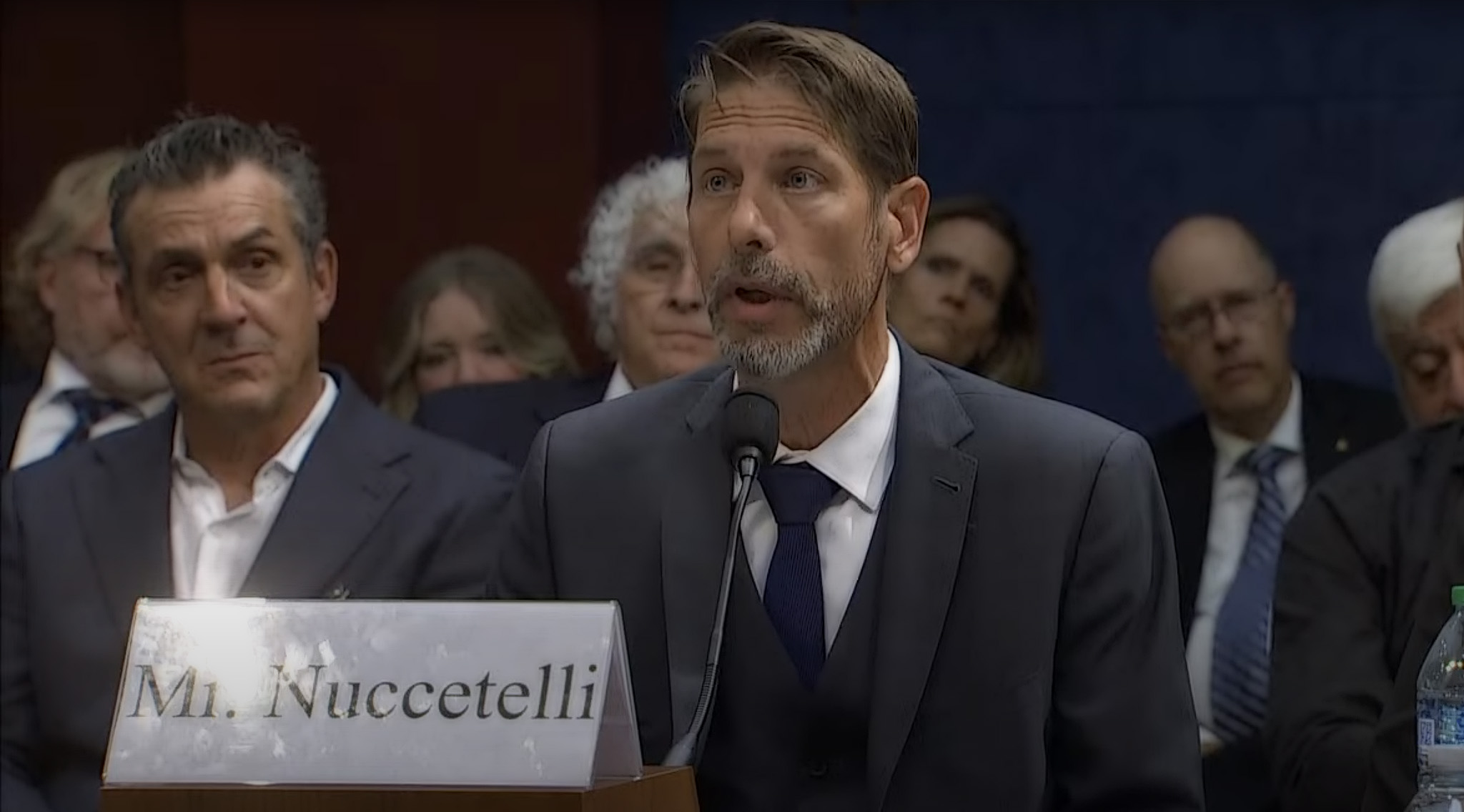
When physicist Kevin H. Knuth sits down with Danny Jones, you get the rare blend of hard science and open-minded inquiry that UAP journalism craves. Knuth isn’t a random pundit—he’s a former NASA Ames Research Center research scientist (Intelligent Systems Division, 2001–2005) and a longtime University at Albany (SUNY) professor of physics who publishes on UAP flight characteristics as well as information physics. University at Albany In the conversation, he traces how a career devoted to rigorous methods pulled him—reluctantly at first—into the UAP problem.
Inside NASA, UAP talk was taboo. “If you mentioned it, everybody would scoff… ‘We’re NASA, we do real things,’” Knuth recalls. That didn’t stop him from thinking ambitiously about space. During the early 2000s return-to-the-Moon push, his team even proposed a digital topographic navigation map for lunar explorers—an overhead + 3-D terrain view astronauts could match to what they saw out the visor. He also shares a child’s-eye memory of the Apollo 11 era—looking up as his father said, “Kevin, there are people up there” —a line that still gives him pause because no one has been able to say it since 1972.
What flipped the switch from curiosity to action? Nukes. Prepping an astrobiology lecture in 2015, Knuth stumbled onto Robert Hastings’ 2010 National Press Club event featuring former USAF officers describing UFO incursions at nuclear missile sites —including Robert Salas ’ account from Malmstrom AFB. “This must be real—and nobody is doing anything about it,” Knuth says. Hastings’ presser is well-documented by mainstream outlets and remains a key waypoint in modern disclosure. CBS NewsInternet ArchiveWikipedia
Knuth’s scientific interest deepened around Japan Airlines Flight 1628 (1986) —the gold-standard airline case with FAA radar , cockpit audio and multiple witnesses. In the show, he recounts former FAA Accidents & Investigations Division Chief John Callahan safeguarding copies of the radar tapes after government officials collected the originals, and he praises recent physics-based re-analyses of the data. Knuth’s own peer-reviewed work estimates extraordinary accelerations from well-evidenced UAP cases, and he specifically cites the JAL-1628 trove. PMC Physicist Daniel Coumbe —formerly of the Niels Bohr Institute —devotes a chapter to JAL-1628 in Anomaly , bringing modern signal analysis to the radar tracks. Bloomsbury
Fieldwork? Knuth is a scientist on UAPx , the Nimitz-connected research nonprofit founded by radar operator Kevin Day with shipmates Gary Voorhis and Jason Turner. In A Tear in the Sky (2022), UAPx deployed instruments across the Catalina Channel. The film shows the messy reality of first missions—including one memorable “unknown” that careful pixel-math later revealed as the International Space Station (an early app’s DST error bit them; the physics didn’t). UAPx’s broader mandate and Nimitz lineage are public; the group continues multi-sensor field campaigns. UAPx IncA Tear in the Sky
The bigger picture is that serious academia is inching toward UAP as a legitimate research topic. Knuth notes their Catalina work feeding a special issue in Progress in Aerospace Sciences. Coverage of his and Matthew Szydagis’ recent peer-reviewed efforts captures the mood: most targets become helicopters or satellites under scrutiny—but a few resist easy classification and deserve better sensors, not jokes. Times Union
For readers new to the names:
- Kevin H. Knuth — former NASA Ames research scientist; now physics professor studying information physics and UAP flight dynamics. University at Albany
- Robert Hastings — researcher behind the “UFOs & Nukes” corpus and the 2010 National Press Club event. CBS News
- Robert Salas — former USAF ICBM launch officer tied to the 1967 Malmstrom AFB shutdown incident. Wikipedia
- John Callahan — former FAA division chief who preserved JAL-1628 data and went public. PMC
- Kevin Day / UAPx — Navy USS Princeton radar operator during the 2004 Nimitz encounters; co-founded UAPx with shipmates to study UAP instrumentally. UAPx IncPopular Mechanics
- Daniel Coumbe — particle physicist (ex-Niels Bohr Institute), author of Anomaly , applying quantitative methods to legacy cases. Bloomsbury
Knuth’s through-line is simple: treat UAP as a physics and data problem. Whether over missile fields, above Alaska, or across the Catalina Channel, the cure for confusion is measurement—and the humility to follow the evidence wherever it leads.