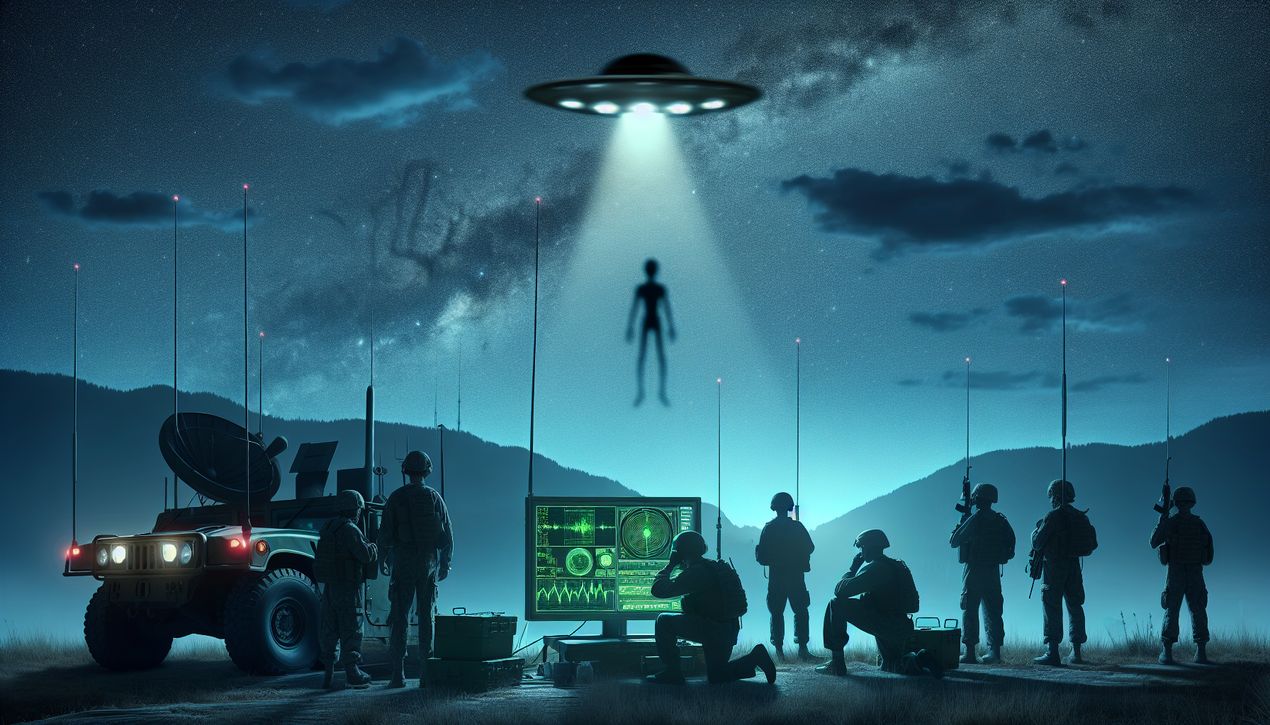
Recent Pentagon UFO Report Reveals New Insights into UAP Mysteries
In a recent report released by the Pentagon, significant progress has been made in understanding Unidentified Aerial Phenomena (UAP). This document, which is part of an ongoing effort to demystify encounters with objects that have evaded conventional
In a recent report released by the Pentagon, significant progress has been made in understanding Unidentified Aerial Phenomena (UAP). This document, which is part of an ongoing effort to demystify encounters with objects that have evaded conventional explanation, sheds light on various incidents involving military personnel. Notably, the report emphasizes the U.S. government's commitment to studying UAP phenomena, backed by the establishment of the All-domain Anomaly Resolution Office (AARO).
This report has intensified discussions within the UFO community, with prominent figures such as former military pilot David Fravor expressing optimism about the transparency being promoted by the Pentagon. Fravor, who experienced a direct encounter with a UAP during a 2004 training exercise off the coast of California, has been a vocal advocate for more thorough investigations into aerial phenomena that exhibit flight characteristics beyond known technology.
Further complicating the narrative are whistleblower disclosures from individuals like David Grusch, a former intelligence officer. Grusch has made headlines with claims that the U.S. government possesses recovered materials and technology from UAP incidents. His assertions, which have sparked both intrigue and skepticism, suggest that there is a deeper story behind UAP encounters, one that could change our understanding of these phenomena fundamentally.
Researchers and scientists within the UAP field, such as Dr. Avi Loeb, have also weighed in, advocating for rigorous scientific inquiry into these encounters. Loeb, known for his work with 'Oumuamua, the first known interstellar object detected passing through our solar system, argues that the study of UAP should not only be the domain of military analysts but also of the scientific community. He underscores the importance of collecting data rigorously and openly, to separate fact from speculation.
In parallel, public interest in UAP-related developments continues to grow. Recent televised hearings and interviews featuring experts like George Knapp and Jeremy Corbell have brought significant mainstream attention to the issue. They have called for increased governmental transparency regarding UAP data, echoing sentiments shared by various stakeholders in the UFO community.
As the AARO continues its work, additional reports are anticipated, which will likely delve deeper into specific incidents and identify patterns or correlations in UAP behavior. With mounting evidence and growing public scrutiny, 2023 could become a pivotal year in the quest to understand the nature of UAPs. The intersection of national security, scientific inquiry, and public interest has the potential to propel the investigation of UAP into a new era, fostering a community of inquiry that transcends the military-mindset of secrecy.
As developments unfold, the UAP narrative remains multifaceted, threading through various domains from military reportings to cutting-edge scientific exploration. The engagement of figures like David Fravor and David Grusch not only emboldens the pursuit of truth but encourages a broader discourse on the implications of UAP encounters in contemporary society.